

Jealous, Actually By Kiki Pape
- Kiki Pape
- Oct 6, 2025
- 3 min read

Updated: Dec 6, 2025
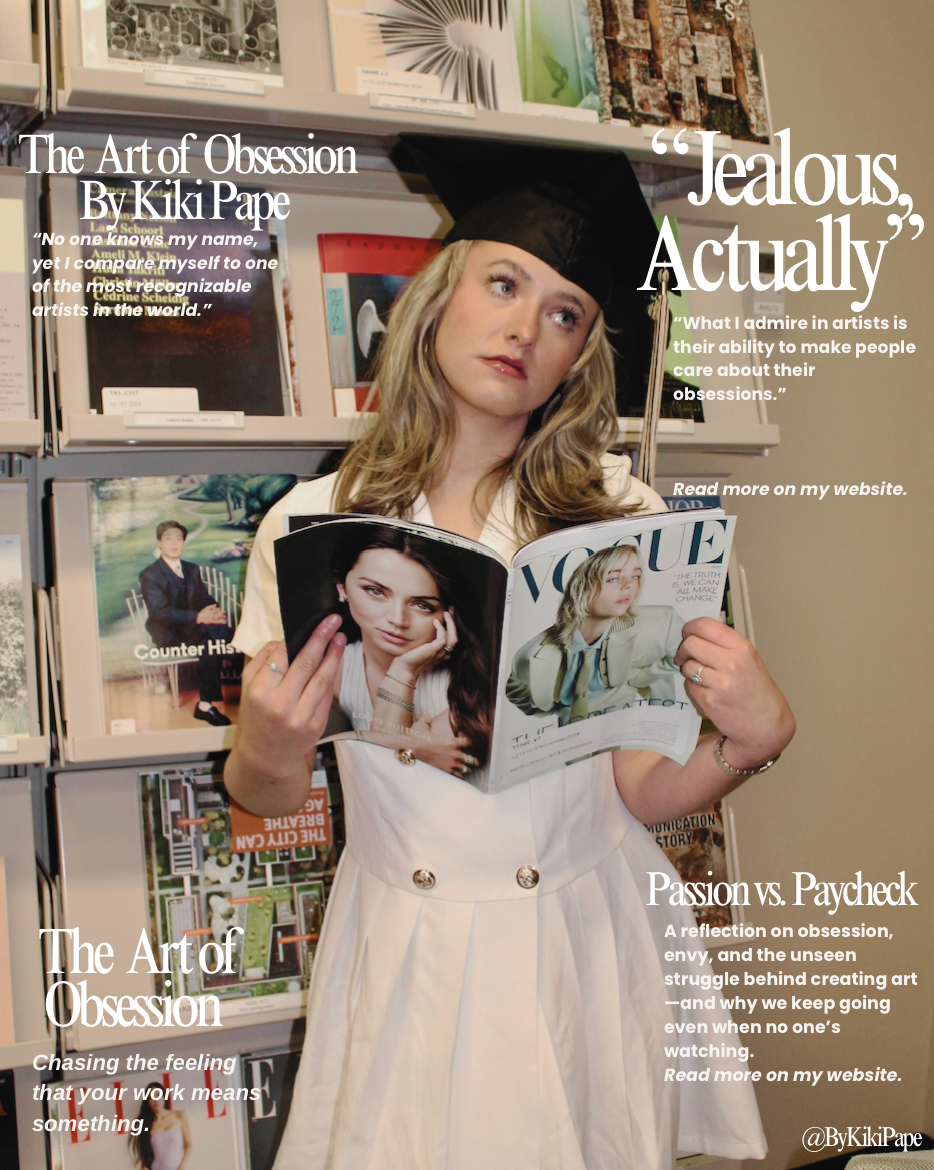
Martin Scorsese once said that, “the true goal of storytelling is to make the audience care about your obsessions.”
What strikes me is how lucky the people who achieve that really are—those rare artists whose obsessions become something the world cares about too. Most of us dream of that kind of resonance, but we only see the polished surface once they get there. The struggle it took to be understood, to be noticed, to be cared about—that part rarely makes the story.
I wasn’t always a fan of Taylor Swift—in fact, there was a time when I pretended to “hate” her. Looking back, I realize that what I was really feeling was jealousy: jealousy that people cared so deeply about her work while my own hours of struggle went unnoticed. No one knows my name, yet I compare myself to Taylor Swift, one of the most recognizable artists in the world.
How Silly? But it was true.
I think back to my classrooms at the University of Colorado Boulder, where I first became captivated by the lyrical brilliance of Wordsworth and Dickinson. Once you fall into their words, you begin to understand why creating art is such a challenging path—especially when it comes to making a living from it.
What I admire in artists like Taylor Swift and in legends throughout history is their ability to make people care about their obsessions. They recognize when the music—and the culture—is shifting, and they know which words will carry meaning.
They sense what’s “cool” before it becomes so, and they carve out their own path. Maybe that’s the lesson: putting yourself out there, but also listening. It’s in balancing both that your art finds its strongest voice.
Does obsession outweigh the need to make money?
I’m not sure. We need art to live—to feel, to connect, to make sense of the world—but so often, the world doesn’t recognize its value. The world rarely treats art as essential. It is usually the last thing funded, the first thing dismissed, the easiest thing to overlook. We celebrate artists once they’re successful, but forget that someone had to believe in them before their work became valuable.
I don’t know if obsession is enough. Some days, it feels like everything. Some days, it feels like not nearly enough. But what I do know is that the fire doesn’t go out, even when I want to bang my head against my computer.
My obsessions always return.
The struggle makes it worth it, and it is my own version of imposter syndrome. The obsession itself is proof: that something in you is alive, even when no one else is watching.
But then, I see someone like my dentist or lawyer on TikTok—people whose work is undeniably essential, yet not traditionally “artistic”—sharing their craft online, building an audience, and finding success without decades of unseen suffering or starving in silence.
And I realize: maybe the idea that artists must endure extreme hardship to be valued is starting to shift. Social media collapses the hierarchy of who gets to be seen, who gets to make a living from their passions, and what counts as “worthy” work.
It doesn’t make the obsession feel any less real, or the struggle any less personal. But it does make one thing clear: passion and proof don’t have to come wrapped in suffering. They just have to exist—and sometimes, being bold enough to share them is enough to spark the fire in others.


Comments